北京大学定量生物学中心/生命科学联合中心
学术报告
题 目:Molecular simulation of channels, transporters and receptors
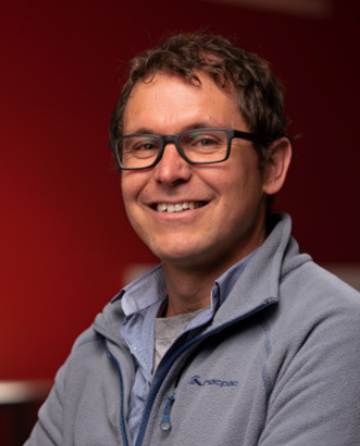
报告人: Ben Corry, Ph.D.
Professor of the Research School of Biology, Australian National University
时 间: 10月29日(周四)13:00-14:00
地 点: 吕志和楼B101
主持人: 宋晨
摘 要:
Molecular simulation has become an indispensable partner to structural biology in the study of membrane proteins to link structure to function. Coarse-grained and atomistic molecular dynamics, and increasingly, AI structure prediction and protein–ligand co-folding, allow us to watch and to predict the dynamic behaviour of these proteins. I will illustrate this with four short stories.
I begin with two proteins that blur the channel–transporter boundary. The malarial lactate/H⁺ transporter PfFNT requires proton transfer, but no conformational change to move its substrate; while the phosphate exporter XPR1 turns out to be a channel that selects inorganic phosphate over anions such as chloride.
Second, the OSCA/TMEM63 family of mechanically activated channels, whose lipid-lined pore also makes them lipid scramblases. I will then turn to ongoing work comparing all fifteen Arabidopsis thaliana OSCAs, asking how their structures and transport mechanisms differ across the family.
Third, Toll-like receptors 7 and 8, which detect single-stranded RNA degradation products and distinguish pathogen RNA from our own by ligands competing at three sites. This includes a previously unknown antagonistic site at which low-abundance endogenous RNA fragments switch the receptor off.
Finally, we systematically compare the ability of coarse-grained MD and AI co-folding to predict lipid binding sites on ion channels. Both locate most experimentally resolved PIP₂ sites, but neither reliably ranks them, so are best used together as I illustrate for the HCN1 channel.
报告人简介:
Ben Corry is a Professor in the Research School of Biology at the Australian National University (ANU). After gaining his PhD from the ANU he held a series of research fellowships at the University of Western Australia, before trotting to the ANU IN 2012. His group uses multiscale molecular simulation in close collaboration with experimental laboratories, to understand how ion channels and membrane transport proteins select and move their substrates, how they are regulated by lipids, and how drugs act on them. This work spans ion channel pharmacology, mechanosensation, antimalarial targets, innate immune receptors and nanoporous membranes for desalination. A former Australian Research Council Future Fellow and Young Tall Poppy awardee, Ben has supervised 29 PhD students and has received several university awards for teaching.
 下载Firefox