北京大学定量生物学中心
学术报告
题 目: Artificial Intelligence Tools for Protein Engineering
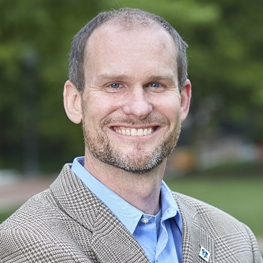
报告人: Jeffrey J. Gray, Ph.D.
Professor of Chemical and Biomolecular Engineering, Johns Hopkins University
时 间: 10月15日(周四)13:00-14:00
地 点: 吕志和楼B101
主持人: 宋晨
摘 要:
Artificial intelligence (AI) algorithms have unlocked incredible possibilities for biomolecular engineering. In this talk, I will share advances from my lab in antibody engineering and protein-protein docking based on AI. Some neural network models outperform physical models for antibody structure prediction, while property prediction remains challenging. Generative language models offer multiple promising routes for design of antibody therapeutics, and they can be aligned with reinforcement learning. AI docking methods can reveal biological mechanisms and allow for screening of potential therapeutics. We probe how to extract a thermodynamic-like energy function from denoising diffusion models. We envision a future where AI methods can be combined with physics for powerful and interpretable biomolecular engineering.
报告人简介:
Jeffrey J. Gray is Professor in the Department of Chemical and Biomolecular Engineering (ChemBE) at the Johns Hopkins University, with joint appointments in the Data Science and AI Institute, the Program in Molecular Biophysics, and the Sidney Kimmel Comprehensive Cancer Center (Oncology). He earned his B.S.E. in chemical engineering at the University of Michigan and his Ph.D. in chemical engineering at the University of Texas at Austin, and he completed post-doctoral training at the University of Washington. His research focuses on computational protein structure prediction and design, particularly protein-protein docking, antibody engineering, membrane proteins, protein-carbohydrate interactions, and deep learning.
Gray serves as the Director of the Rosetta Commons, an international collaboration of over 100 leading labs focused on biomolecular structure prediction, analysis, and design. He is the Director of the NSF-supported Rosetta Commons Summer Intern (REU) Program and the Rosetta Commons Post-baccalaureate Program (RaMP). Gray is a Fellow of the American Institute for Medical and Biological Engineering (AIMBE), and his awards include the AIChE’s David Himmelblau Award, the Beckman Young Investigator Award, the Johns Hopkins Alumni Association Excellence in Teaching Award, and the Capers and Marion McDonald Award for Excellence in Mentoring and Advising. He previously served on the editorial board of Proteins. At Johns Hopkins he has been the Vice Chair of Research of the ChemBE Department, an engineering faculty senator, a member of the Diversity Leadership Council, a co-founder of the Homewood Council on Inclusive Excellence, and the ChemBE departmental diversity champion. He coauthored the 2024 Community Statement on the Responsible Development of AI for Protein Design (responsiblebiodesign.ai).
Further information about Prof. Gray and his research group is available at http://graylab.jhu.edu.
 下载Firefox